Technical Article
hBN Dielectric Constant: Electrical and Chemical Properties
Hexagonal boron nitride (hBN) has a dielectric constant typically discussed in the 3-5 range, with modern thin-crystal measurements reporting an out-of-plane low-field value near 3.4 ± 0.2 and untreated ceramic measurements often near 4.2. That makes hBN a low-loss electrical insulator rather than a high-k dielectric, but its value comes from the rare combination of electrical insulation, useful thermal conductivity, chemical inertness, and high-temperature stability.
A complete engineering answer is broader than a single property value: it should explain what the hBN dielectric constant means, why hBN does not behave like graphite electrically, which chemical environments it tolerates, where it fails, and how to specify boron nitride ceramic materials for high-temperature insulation or molten-material contact.
Why hBN Behaves as an Electrical Insulator
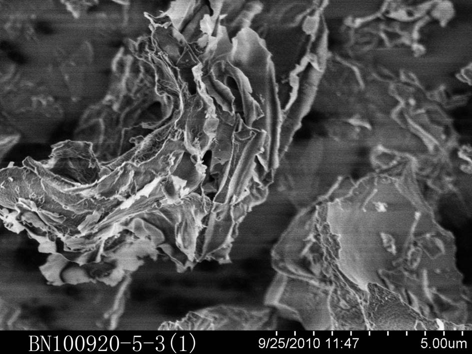
hBN is often called white graphite because its atoms form stacked hexagonal layers. Inside each layer, boron and nitrogen atoms are held by strong covalent bonds; between layers, weaker van der Waals forces create easy slip and strong anisotropy. The important difference from graphite is electronic: graphite has delocalized electrons, while hBN has polar B-N bonds and a wide band gap, so electrons are not free to move through the material under normal service conditions.
That structure explains the unusual property combination. Heat can move efficiently through the basal plane, while electrical leakage remains low. It also explains why property values differ by direction, density, purity, binder system, test frequency, and whether the sample is a hot-pressed ceramic, a pyrolytic film, or an atomically thin flake. For a deeper mechanism-focused explanation, see the related Ceramic-Solutions article on why hBN does not conduct electricity.
Key Electrical Properties of hBN
The most useful way to specify hBN is not a single number; it is a small set of electrical properties tied to the application.
| Property | Typical value or design range | Why it matters |
|---|---|---|
| Relative permittivity / dielectric constant | Commonly 3-5; out-of-plane thin-crystal data near 3.4 ± 0.2; untreated ceramic data around 4.2 | Determines capacitance, electric-field distribution, and RF/microwave behavior. |
| Dielectric loss | Often very low for clean, untreated hBN; reported values depend strongly on frequency and processing | Supports high-frequency insulation and low-loss dielectric uses. |
| Volume resistivity | Often above 1014 Ω·cm at room temperature for high-purity BN ceramic grades | Confirms hBN behaves as an electrical insulator in most fixtures. |
| Breakdown strength | Bulk ceramic datasheets often report values in kV/mm; thin flakes can report MV/cm-scale breakdown | Critical for high-voltage insulation, but must be specified by geometry and test method. |
| Band gap | Commonly discussed around 5.9-6.4 eV for hBN | Explains why hBN is electrically insulating and optically white. |
| Thermal conductivity | Strongly anisotropic; hot-pressed bodies may be tens of W/m·K while thin/high-quality layers can be much higher in-plane | Enables heat spreading without creating an electrical short. |
Design rule: treat the hBN dielectric constant as a measured range tied to grade, orientation, density, frequency, and temperature.
For design work, treat the dielectric constant as an engineering range, not a universal constant. A dense, oriented, high-purity hBN component, a BN composite, and a few-layer hBN film can all be called hBN while delivering different permittivity, loss, and breakdown behavior.
Chemical Stability and Compatibility Limits
Hexagonal boron nitride is valued because it is chemically inert against many metals, glasses, semiconductor materials, and conventional corrosive media. In high-temperature industrial fixtures, that inertness helps reduce contamination, wetting, sticking, and reaction between a fixture and the processed material.
The important caveat is that chemically inert does not mean universal. BN is generally resistant to many acids and many molten metals, but it can be attacked by molten alkali salts and nitrides. Some high-temperature metal systems can wet or react with BN depending on temperature, atmosphere, alloy chemistry, oxygen content, and contact time. Atmosphere is equally important: service limits in air are usually lower than limits in vacuum or inert gas because oxidation becomes the governing mechanism.
Where hBN Properties Create Real Application Value
| Application | Property requirement | Why hBN fits | Specification caution |
|---|---|---|---|
| High-temperature electrical insulation | Low leakage, low dielectric loss, thermal stability | hBN insulates electrically while moving heat away from the hot zone. | Confirm resistivity and breakdown strength at service temperature, not only room temperature. |
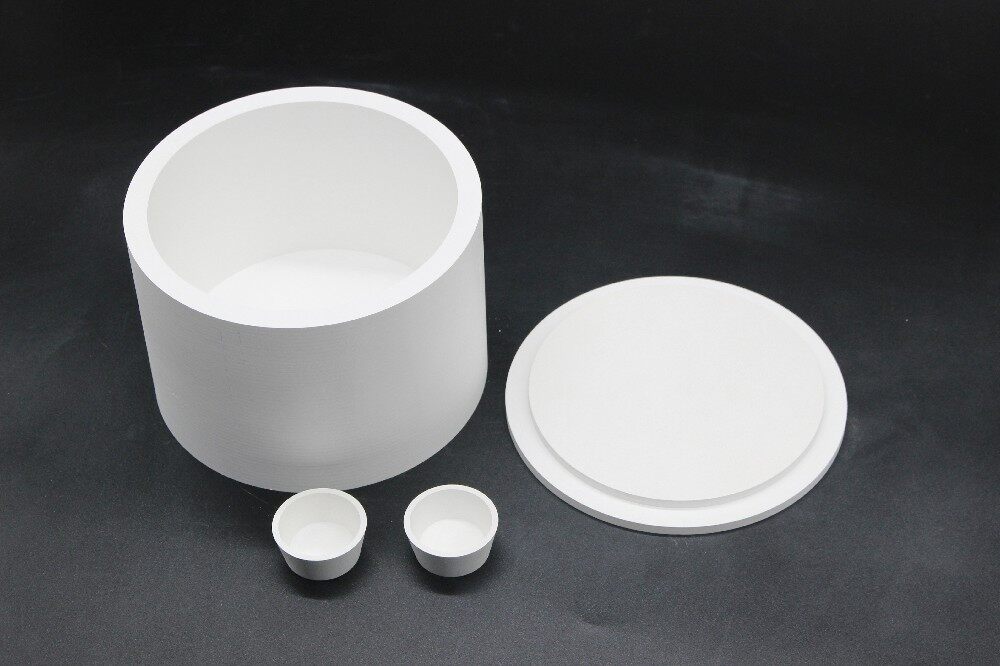
| BN crucibles and saggers | Chemical inertness, purity, thermal shock resistance | hBN reduces reaction and contamination during metal, alloy, glass, and ceramic processing. | Match grade to atmosphere: air, vacuum, inert gas, or reducing environment. |
| Thermocouple protection sleeves | Electrical insulation, thermal conductivity, corrosion resistance | hBN protects sensors while responding quickly to temperature changes. | Check molten-media compatibility and mechanical shock. |
| Semiconductor and vacuum fixtures | Low contamination, machinability, insulating behavior | hBN can be machined into precise insulators, spacers, and heat-management parts. | Specify outgassing, particle control, purity, and cleaning method. |
| Release surfaces and forming molds | Non-wetting, lubricity, thermal stability | hBN can reduce sticking where graphite is too conductive or chemically active. | Avoid assuming high mechanical strength; BN is machinable but still brittle. |
For molten-material or high-purity processing, see Ceramic-Solutions BN crucibles and saggers. For shaped fixtures, sleeves, and spacers, see boron nitride insulation parts.
hBN vs Alumina, Graphite, and PBN
| Material | Strength | Limitation | Best fit |
|---|---|---|---|
| Hexagonal boron nitride (hBN) | Electrical insulation, machinability, thermal shock resistance, non-wetting behavior | Lower mechanical strength than many structural ceramics; atmosphere-sensitive at high temperature | High-temperature insulators, crucibles, thermocouple sleeves, release fixtures. |
| Alumina (Al2O3) | High hardness, wear resistance, good dielectric strength, broad availability | More reactive/sticking risk in some molten-material processes; harder to machine after sintering | Structural insulators, wear parts, general ceramic components. |
| Graphite | High thermal shock resistance, machinability, conductivity, high-temperature use in inert/vacuum environments | Electrically conductive and reactive with some metals or oxidizing environments | Conductive hot-zone tooling where electrical insulation is not required. |
| Pyrolytic boron nitride (PBN) | Very high purity, strong anisotropy, low contamination | Higher cost and different fabrication route than hot-pressed BN | Semiconductor crystal growth, evaporation boats, ultra-clean crucibles. |
Specification Checklist for BN Ceramic Parts
Before selecting hBN, define the actual operating window. A useful engineering specification should include:
- Electrical target: dielectric constant range, volume resistivity, dielectric loss, and breakdown test method.
- Thermal target: maximum continuous temperature in air, vacuum, and inert gas, plus thermal cycling rate.
- Chemical exposure: molten metals, salts, glass, vapor species, acids, alkalis, and cleaning agents.
- Purity and binder: pure BN, BN composite, PBN, ZSBN, BN-AlN, or another grade.
- Mechanical requirements: bending load, compressive load, wall thickness, impact risk, and edge geometry.
- Machining details: tolerance, surface finish, minimum wall, holes, slots, and post-machining cleaning.
- Contamination rules: allowable oxygen, metallic impurities, particles, and outgassing.
Common Mistakes When Reading hBN Property Data
The first mistake is mixing bulk ceramic data with thin-film data. A thin flake tested between metal electrodes is not equivalent to a hot-pressed tube, plate, or crucible. Use thin-film literature for electronics design and bulk ceramic data for parts, fixtures, and furnace hardware.
The second mistake is copying exponent ranges without checking formatting. Electrical resistivity is often written with superscripts, such as 1014 Ω·cm or 1016 Ω·cm. When superscripts are lost in web formatting, the result can become physically meaningless. Always normalize units and exponents before publishing or specifying.
The third mistake is treating hBN as mechanically strong because it performs well at high temperature. hBN is machinable and thermally stable, but it is not a structural ceramic like silicon nitride or zirconia. Design it as a functional insulating and chemical-barrier material, not as a high-load beam unless the chosen composite grade supports that role.
The practical conclusion is simple: the hBN dielectric constant is only the starting point. Hexagonal boron nitride earns its place in advanced ceramic design when its low-loss insulation, thermal conductivity, chemical stability, and machinability solve the same problem at once. For high-temperature insulation, crucibles, thermocouple protection, and semiconductor fixtures, the best results come from matching the BN grade to the atmosphere, chemistry, and electrical field instead of selecting by one property alone.
Frequently Asked Questions
Need custom hexagonal boron nitride support?
Contact Our TeamEngineering References
- Pierret et al., Dielectric permittivity, conductivity and breakdown field of hexagonal boron nitride.
- Cuenca et al., Dielectric spectroscopy of hydrogenated hexagonal boron nitride ceramics.
- Hattori et al., Layer-by-Layer Dielectric Breakdown of Hexagonal Boron Nitride.
- Li and Chen, Atomically Thin Boron Nitride: Unique Properties and Applications.
- Boron nitride material overview, used for broad property and terminology context.