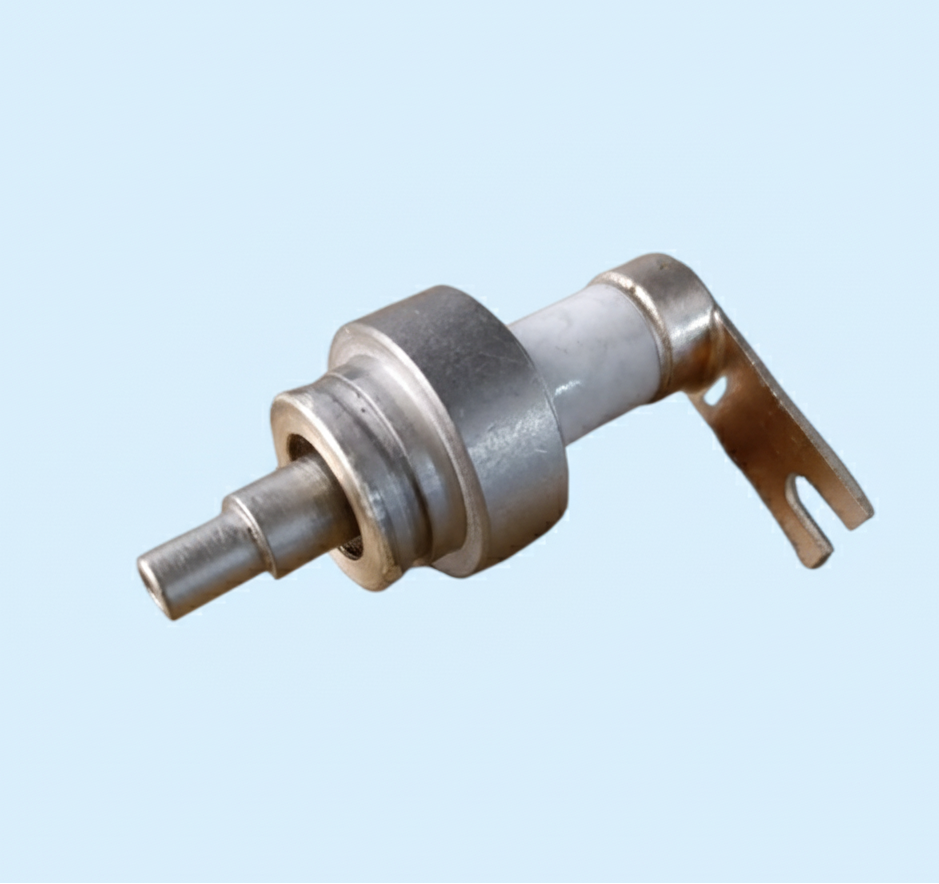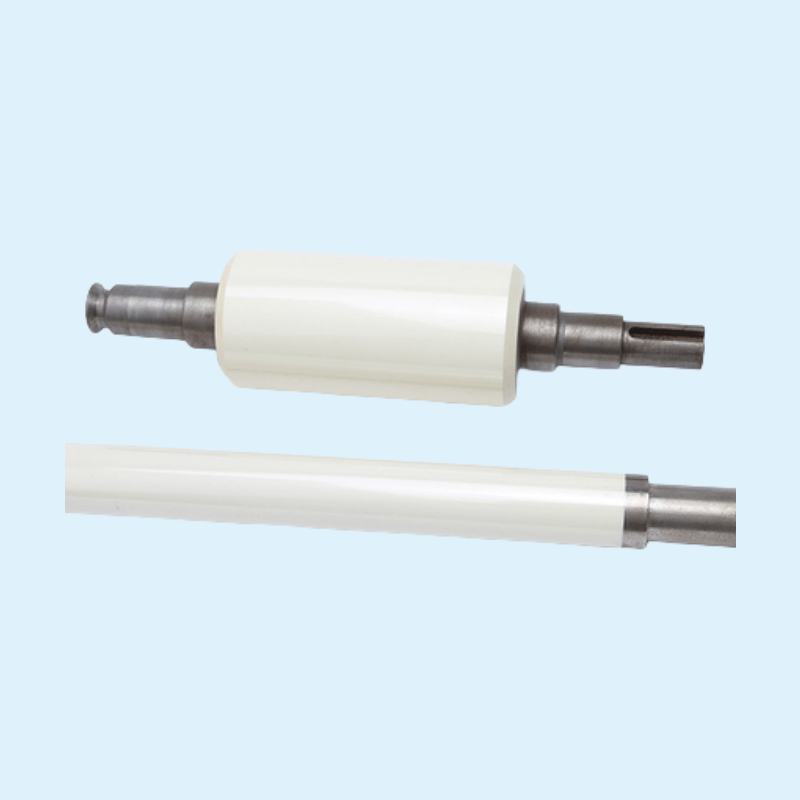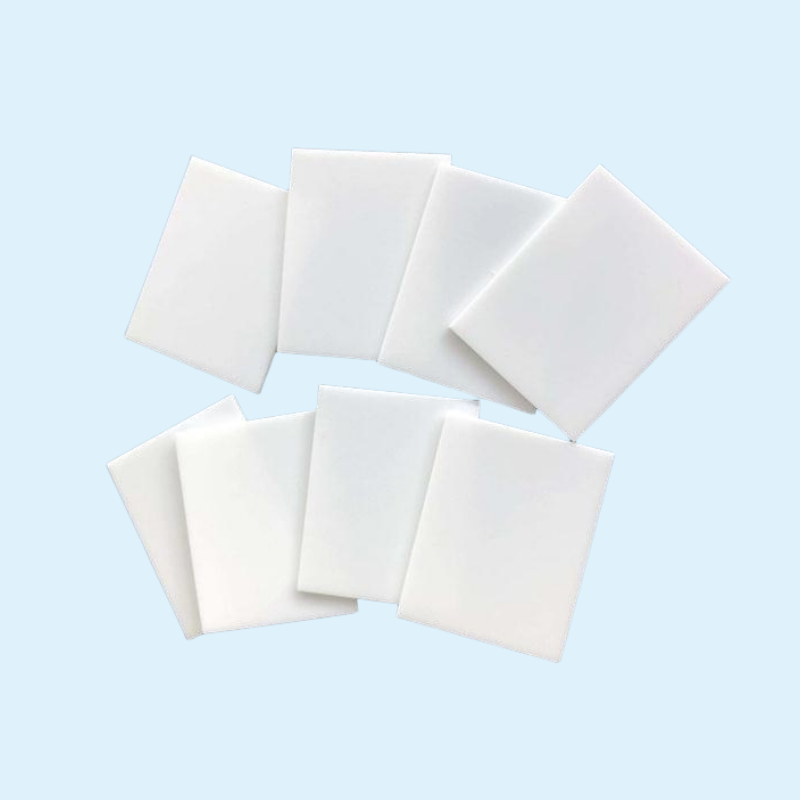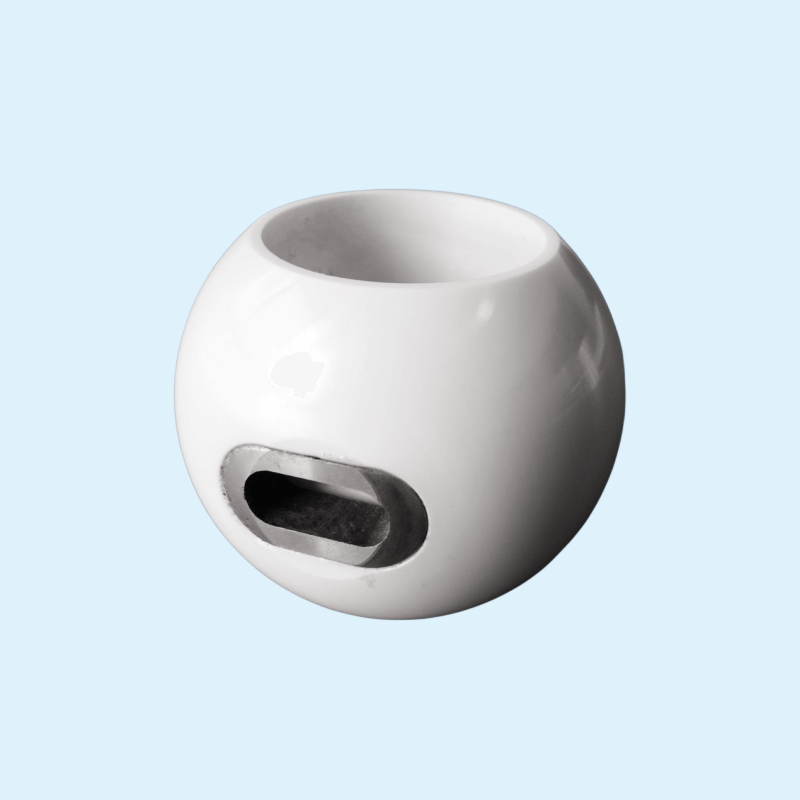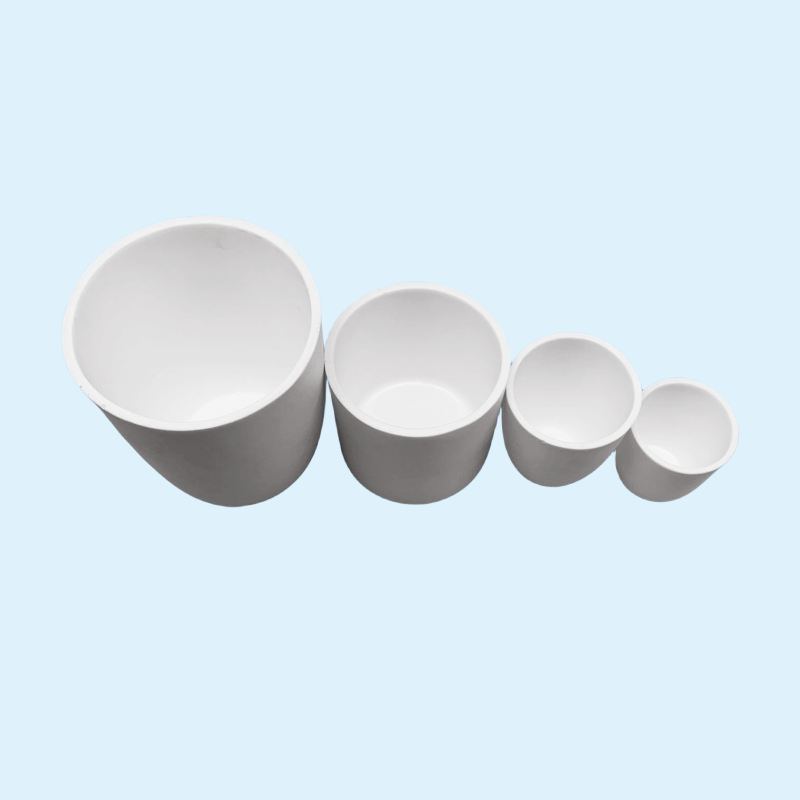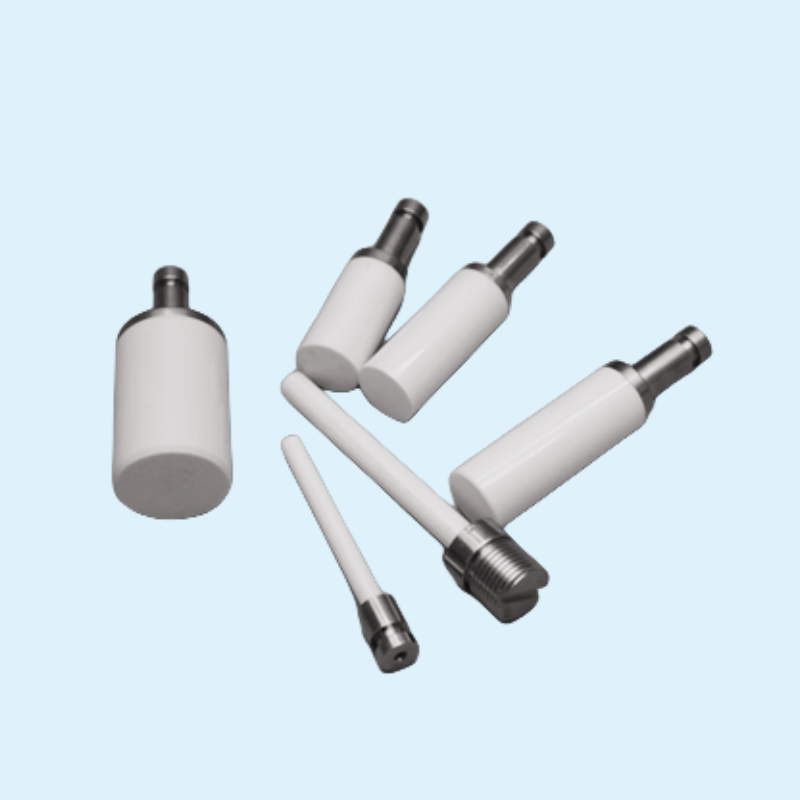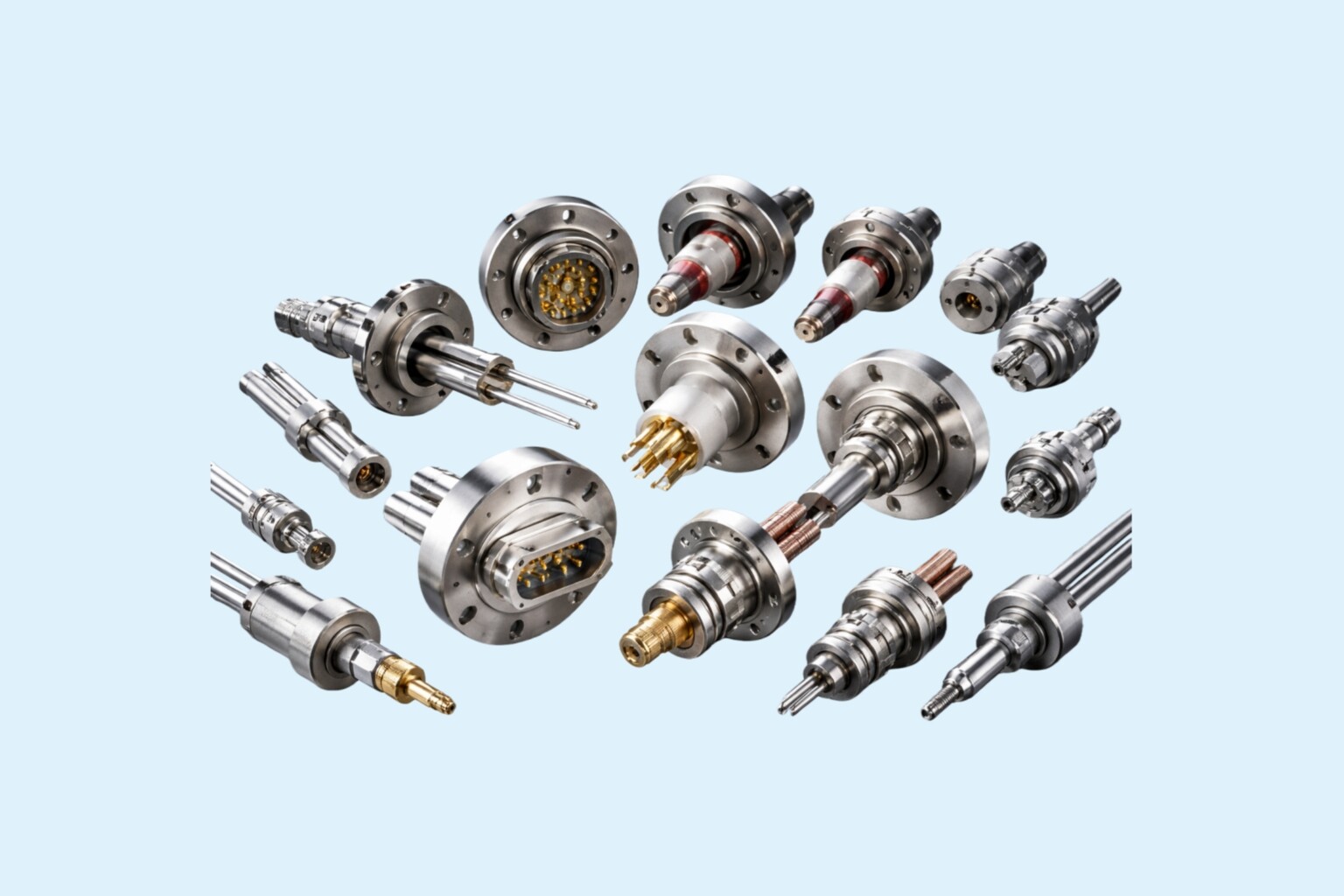
Vacuum feedthroughs are critical components used to transfer electrical signals, power, data, and media across the wall of a vacuum chamber while maintaining vacuum integrity. They are widely applied in high vacuum and ultra-high vacuum systems where leak tightness, electrical insulation, and long-term reliability are essential.
Cersol offers a broad range of vacuum feedthrough solutions based on proven ceramic-to-metal sealing technologies, supporting both standard configurations and application-specific customization.
A vacuum feedthrough provides a sealed interface that allows external connections to pass into a vacuum environment without compromising system performance. Depending on the application, feedthroughs may transmit:
1. Electrical and control signals
2. High voltage or high current power
3. RF and high-frequency signals
4. Sensor and thermocouple signals
5. Liquids and process gases
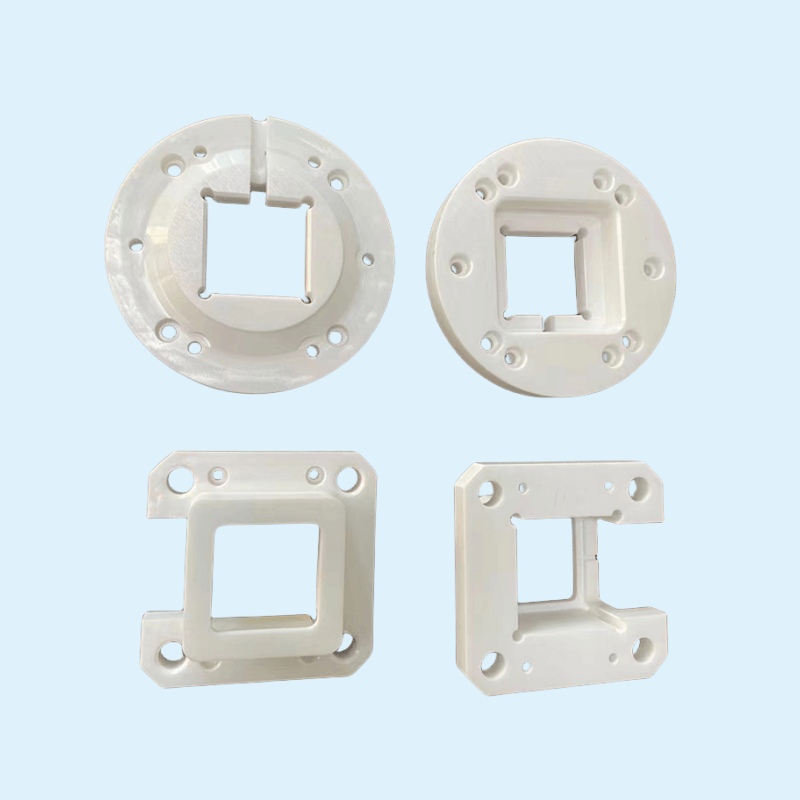
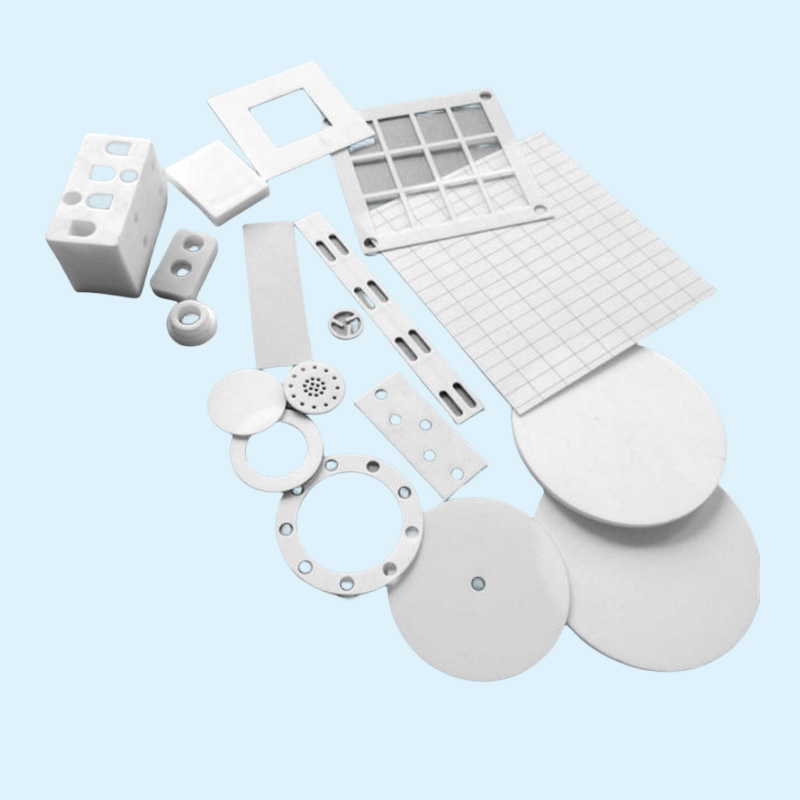
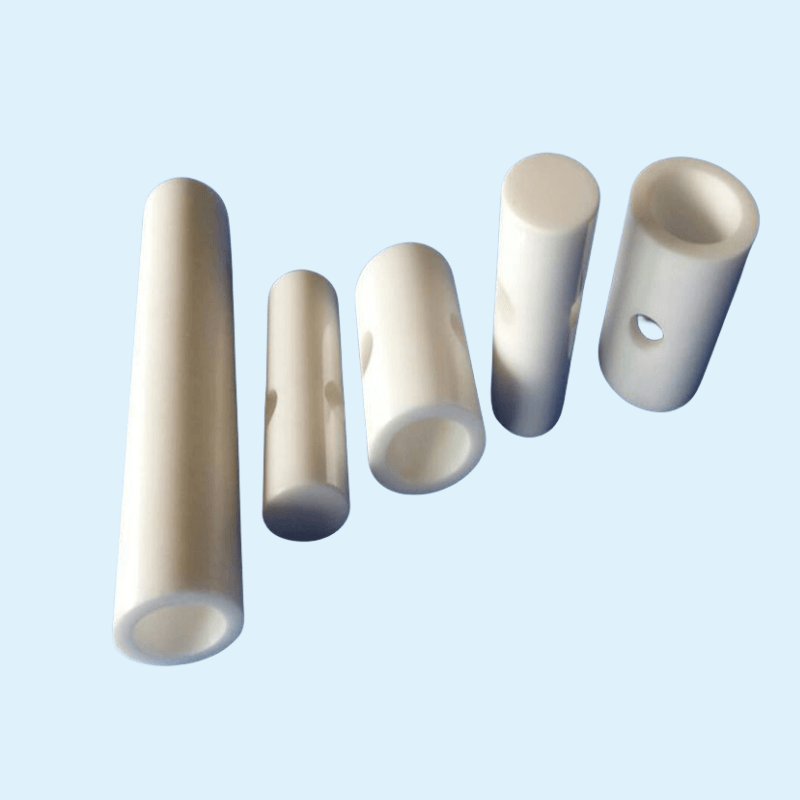
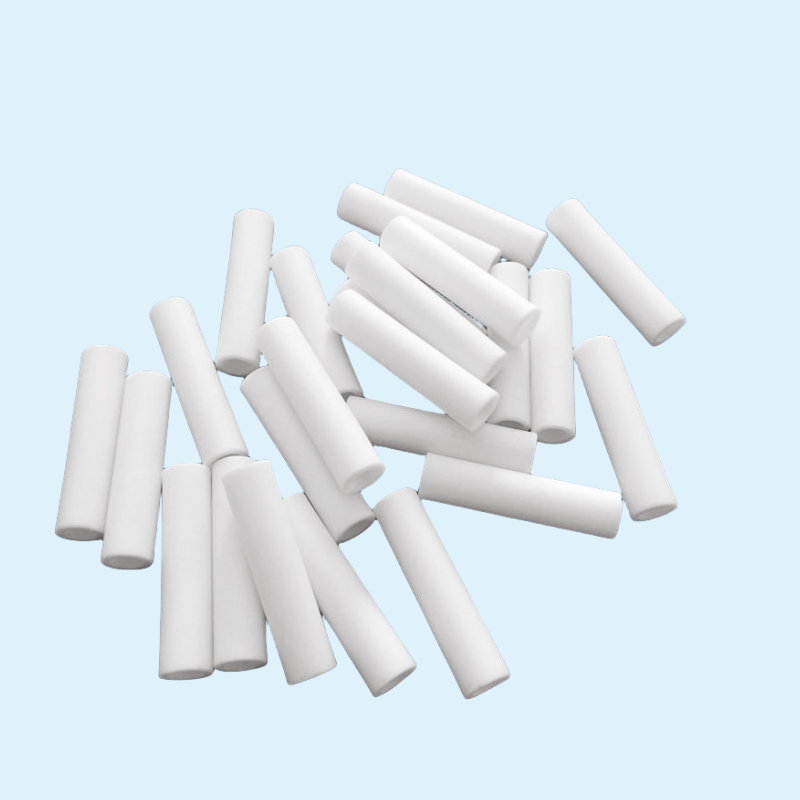
Ceramic feedthroughs are commonly used due to their excellent dielectric strength, thermal stability, and compatibility with demanding vacuum conditions.
Freethrough type |
Description |
Key Benefits |
Typical Uses |
|
Electrical & Signal Feedthroughs |
Feedthroughs for low-power electrical and control signal transmission |
Stable signal integrity, multi-pin options, high vacuum compatibility |
Vacuum instrumentation, laboratory systems, automation equipment |
|
Coaxial & RF Feedthroughs |
Designed for RF and high-frequency signal transmission through vacuum walls |
Low signal loss, impedance stability, reliable RF performance |
Plasma systems, RF testing, communication experiments |
| Power & High-Voltage Feedthroughs |
Feedthroughs for high current and high voltage power delivery |
High dielectric strength, robust ceramic insulation, safe isolation |
Vacuum furnaces, ion sources, electron beam systems |
| Thermocouple & Sensor Feedthroughs |
Interfaces for temperature and sensor signal transmission |
Accurate sensing, stable output, compatible with multiple sensor types |
Thin film deposition, thermal processing, research equipment |
| Fluid & Gas Feedthroughs |
Vacuum-sealed feedthroughs for liquid or gas transfer |
Excellent leak tightness, corrosion-resistant materials |
Cooling circuits, process gas delivery |
| Data & Custom Interface Feedthroughs |
Feedthroughs for high-speed data or specialized interfaces |
Custom configurations, system-level integration support |
Advanced instruments, customized vacuum systems |
Vacuum feedthrough solutions are widely used in:
1. Semiconductor manufacturing equipment
Cersol’s vacuum feedthrough solutions utilize advanced ceramic-to-metal and glass-to-metal sealing techniques, ensuring reliable performance in high and ultra-high vacuum environments.
1. Ultra-low leak rates
2. Excellent electrical insulation
3. High thermal and mechanical stability
4. Long service life under demanding operating conditions
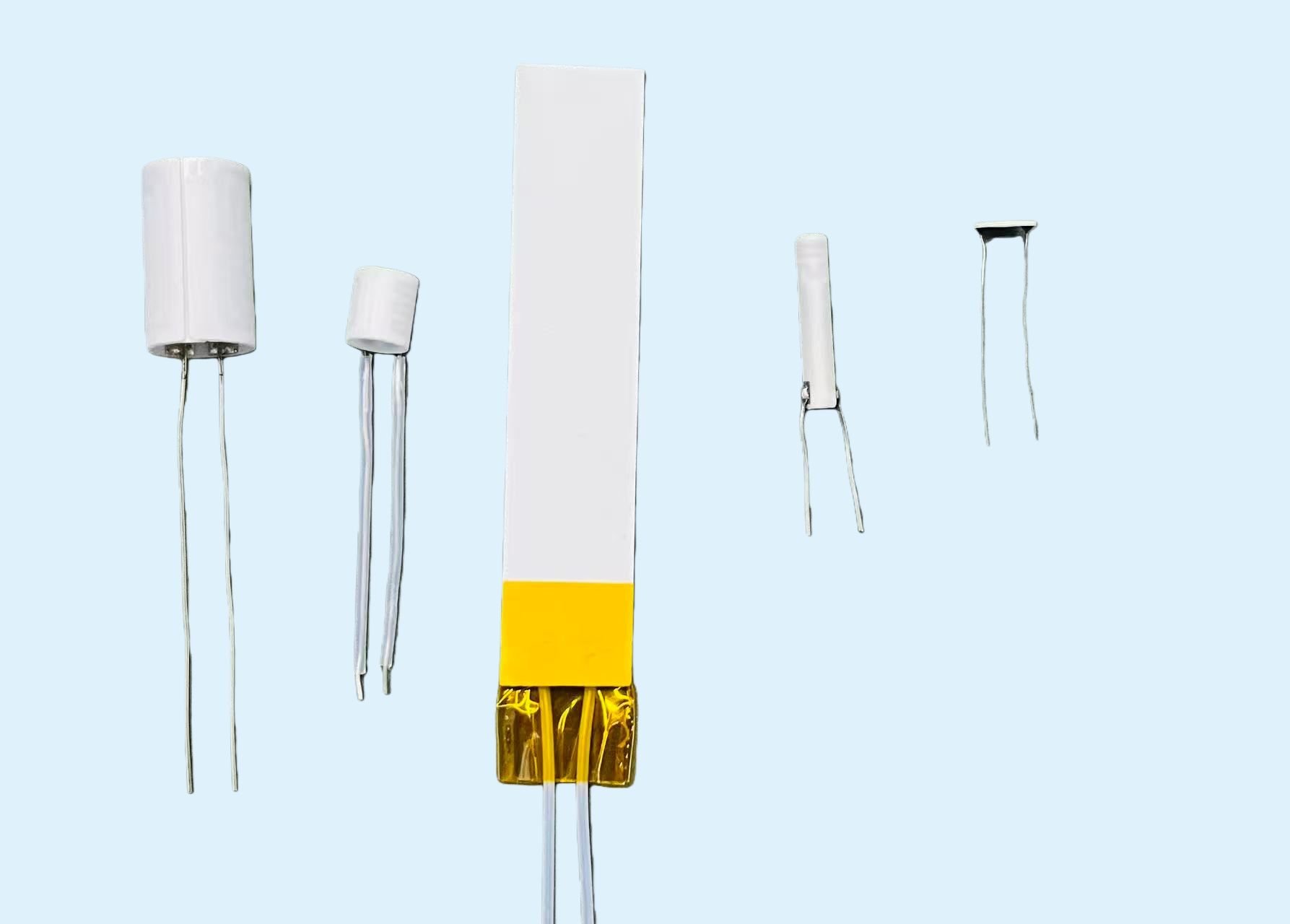
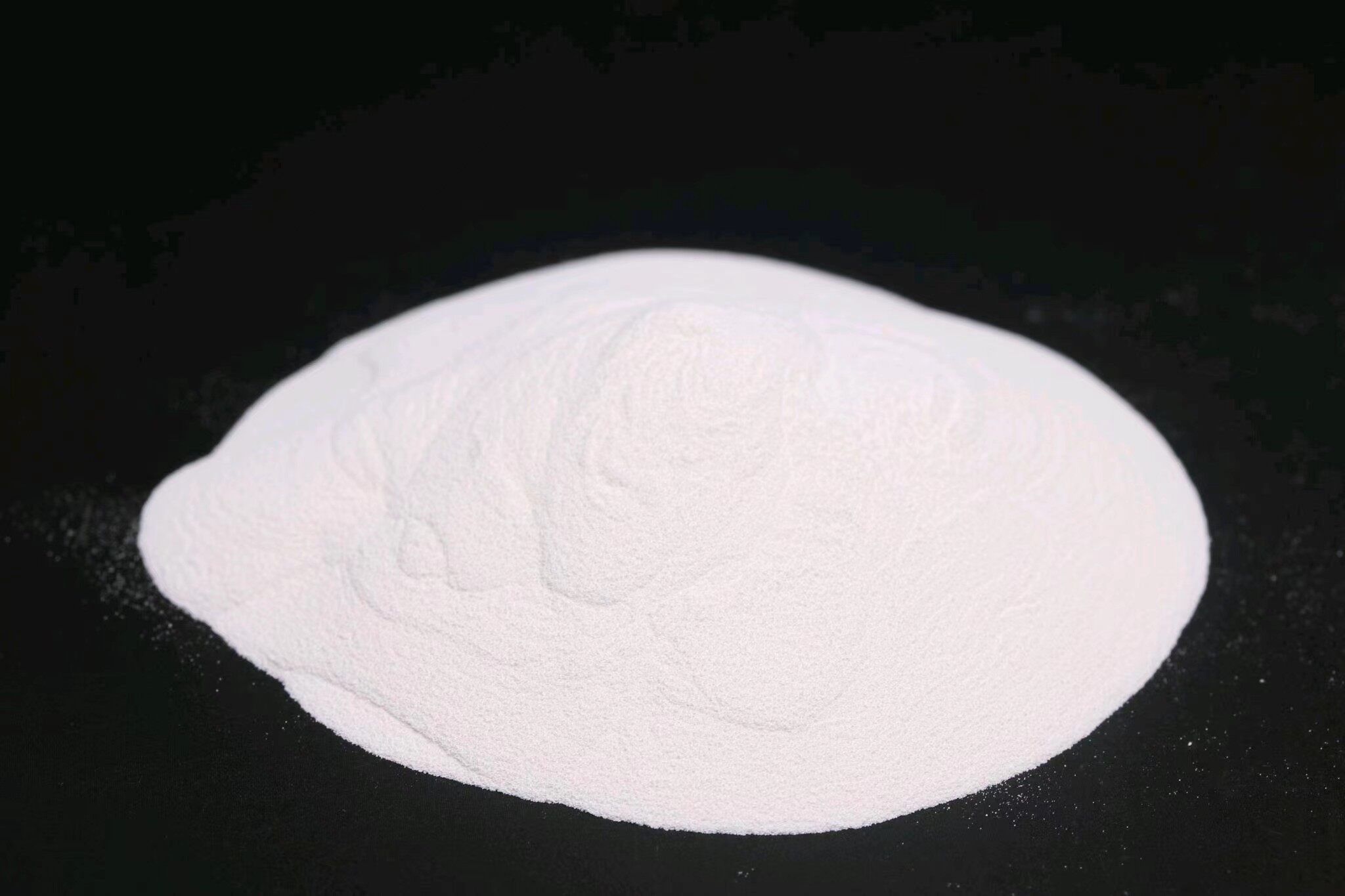
High-purity alumina ceramic is widely used as the insulating material, making ceramic feedthroughs ideal for applications involving high voltage, temperature variation, or aggressive operating cycles.
Vacuum feedthroughs can be supplied with a variety of standard mounting interfaces to ensure easy integration into existing vacuum systems:
1. CF (ConFlat®) flanges
2. KF / NW flanges
3. ISO flanges
4. Custom flange designs
Multiple feedthrough types can also be combined on a single flange to support complex system layouts.
In addition to standard vacuum feedthrough products, Cersol provides custom feedthrough solutions tailored to specific application requirements, including:
1. Custom pin counts and layouts
2. Voltage, current, and signal optimization
3. Material and structural customization
4. Support for complex vacuum system integration
Our engineering team works closely with customers to deliver reliable feedthrough solutions optimized for performance, safety, and long-term operation.
For technical consultation, product selection, or custom vacuum feedthrough solutions, please contact Cersol. Our team is ready to support your vacuum system requirements with reliable, high-performance feedthrough technologies.