Why Have Ceramics Not Advanced More? The Real Story Behind Advanced Ceramics
Direct Answer
Ceramics have advanced a great deal, but not in the way many people expected in the 1980s. The big public promise was structural ceramics: tougher, machinable parts and nearly adiabatic ceramic engines that could run hotter with little or no cooling. That vision ran into hard limits: low fracture toughness, flaw sensitivity, expensive machining, difficult quality control, slow qualification, legacy manufacturing plants, and cheaper alternatives that were "good enough."
The quieter reality is more interesting. Advanced ceramics now sit inside jet engines, catalytic converters, diesel filters, dental crowns, phones, power electronics, armor, bearings, cutting tools, solid oxide fuel cells, medical implants, and experimental solid-state batteries. Ceramics did not fail. They became specialist materials instead of universal replacements for metals and polymers.
The 1980s Promise: Ceramic Engines and the "Next Big Thing"
The question often starts with a familiar memory: a materials professor in the early 1980s predicted that ceramics would be the next big thing. They would become less brittle, easier to machine, and so heat-resistant that ceramic engines might need little cooling.
That prediction was not foolish. After the 1970s energy crisis, engine designers were hungry for higher efficiency. A hotter engine can, in theory, extract more useful work from fuel. Ceramics seemed ideal because many of them resist heat, oxidation, wear, and corrosion far better than common metals. Proof-of-concept ceramic engine programs did exist, and ceramic turbochargers, valves, liners, and insulation components were seriously investigated.
The problem was not that ceramics lacked impressive properties. The problem was that engines punish materials in too many ways at once: heat, vibration, tensile stress, thermal shock, impact damage, fatigue, oxidation, dimensional precision, repairability, and cost. Ceramics are excellent in compression and heat, but weak in damage tolerance compared with metals. One hidden pore, machining flaw, or thermal stress concentration can become a crack.
That is why the all-ceramic engine remained a laboratory and prototype story rather than a mass-market automobile story.
The Short Version: Ceramics Advanced, But Mostly Out of Sight
If "advanced" means "replaced steel and aluminum in engines, cars, appliances, and machinery," ceramics advanced less than expected. If "advanced" means "became essential to high-value systems where heat, wear, electrical behavior, or chemical resistance matter," ceramics advanced enormously.
This distinction matters: advanced ceramics are not missing; they are hidden. Consumers may not notice ceramic turbine shrouds, multilayer ceramic capacitors, oxygen sensors, diesel particulate filters, zirconia crowns, silicon carbide power devices, or ceramic substrates inside emission-control systems. But those are real technical advances.
The public did not get a "ceramic car engine" revolution. Industry got thousands of smaller ceramic wins.
Why Ceramics Are Hard to Make Mainstream
1. Brittleness Is Not Just a Slogan
The central materials problem is fracture toughness. Many ceramics are hard, heat-resistant, and chemically stable because their atomic bonds are strong and directional. Those same bonding characteristics often leave them with little plastic deformation. Metals can blunt cracks by yielding. Ceramics often cannot.
That means a ceramic part can have excellent strength in a perfect test coupon and still be risky in a large, complex, mass-produced component. Real parts contain pores, inclusions, surface scratches, grain-boundary defects, machining damage, and thermal gradients. In ceramics, those small defects matter a lot.
Ceramic matrix composites, transformation-toughened zirconia, crack bridging, crack deflection, and fiber reinforcement all help. They do not make ceramics behave like steel.
2. Manufacturing Is the Bottleneck
A metal part can often be cast, forged, welded, machined, repaired, and inspected using mature industrial systems. A ceramic part usually starts as powder or slurry, is shaped into a fragile green body, then dried, debound, sintered, fired, infiltrated, or hot-pressed. During sintering, parts shrink. That shrinkage must be controlled precisely.
If the final dimensions are wrong, machining is difficult because advanced ceramics are extremely hard. Grinding and diamond tooling can work, but they are slow and expensive. This is why near-net-shape forming is so important in ceramics: ideally, the part comes out close to finished shape.
Lab success and factory success are different worlds. A ceramic part that works once in a lab is not yet a reliable part that can be produced by the million, inspected cheaply, and installed in a warranty-sensitive product.
3. Scale-Up Takes Years and Deep Supply Chains
Ceramic matrix composites in jet engines are a good example. GE Aerospace says the GE9X uses ceramic matrix composite structures in hot sections, and its GE9X page claims CMC-related benefits including greater durability and less cooling air. The same page lists more than 100 CMC parts in the GE9X engine.
That is progress, but it is not simple progress. CMCs require ceramic fibers, matrix processing, coatings, environmental protection, nondestructive inspection, and conservative certification. In aerospace materials, the invention is only the first mile; qualification and supply chain maturity are the marathon.
4. Cheaper Alternatives Often Win
Ceramics win when their special properties are indispensable. They struggle when metals, polymers, glass-fiber composites, carbon-fiber composites, coatings, or cermets can do the job well enough.
Glass-fiber composites, for example, became cheap and formable for products from power tools to wind turbines. Polymer composites improved dramatically in temperature capability and manufacturability. Nickel superalloys plus cooling channels and thermal barrier coatings remained extremely good in turbines. For many applications, switching to a structural ceramic did not offer enough benefit to justify redesigning the factory.
This is one of the least glamorous answers, but it may be the most important: ceramics often lose to the total system cost, not to the physics alone.
5. Legacy Plants Do Not Retool Easily
Forming, grinding, and cutting ceramics require specialized machines and dedicated floor space. That matters. A company with an old engine plant is not going to rebuild entire production lines for a material unless the performance gain is overwhelming and the market demands it.
This is why ceramics often enter as inserts, coatings, substrates, filters, bearings, shrouds, crowns, membranes, and electronic components instead of full structural replacements.
6. Talent and Institutional Memory Matter
There is also a softer constraint: fewer people with deep ceramic processing experience. This is hard to quantify, but it is plausible as an industrial bottleneck. Ceramic processing is not only "materials science" in the abstract. It requires practical knowledge of powders, binders, drying, firing, furnaces, shrinkage, porosity, grain growth, tooling, inspection, and failure analysis.
When an industry has fewer specialized programs, fewer suppliers, and fewer experienced process engineers, adoption slows even when the science is promising.
Where Ceramics Actually Won
Jet Engines and Ceramic Matrix Composites
The strongest counterexample to "ceramics did not advance" is the jet engine. GE Aerospace states that the CFM LEAP family has delivered a 15 percent fuel-efficiency improvement since entering service in 2016, and CMCs are part of the broader material story in modern engines. The GE9X uses CMC structures in the combustor and turbine areas and claims reduced cooling-air requirements.
This is exactly where ceramics make sense: hot, high-value environments where weight and temperature capability justify the cost.
Emissions Control: Catalytic Converter Substrates and Particulate Filters
Ceramic honeycomb substrates and particulate filters are a quiet mass-market success. Corning describes its ceramic substrates and particulate filters as the core of emission-control systems for passenger cars, heavy-duty trucks, and construction equipment. This is not a glamorous "ceramic engine," but it is a huge ceramic manufacturing achievement: porous, thermally stable structures made at scale for harsh exhaust environments.
Electronics: MLCCs, Sensors, Packages, and RF Components
Open a phone, motherboard, or power supply and you will find ceramics everywhere. Multilayer ceramic capacitors are tiny stacks of alternating ceramic dielectric and metal electrodes. A modern MLCC is a triumph of powder processing, tape casting, electrode printing, stacking, sintering, and microstructure control.
Ceramic resistors, antennas, circuit boards, oxygen sensors, piezoelectric sensors, and semiconductor packages are not failed technologies. They are the infrastructure of modern electronics.
Silicon Carbide Power Electronics
Silicon carbide is both a ceramic and a wide-bandgap semiconductor. SiC power devices are valuable in high-voltage, high-temperature, and high-frequency systems such as electric vehicles, renewable energy inverters, fast chargers, and industrial drives. This is one of the clearest examples of ceramics becoming more important because electrification needs exactly the properties they offer.
Dental Zirconia and Medical Implants
Yttria-stabilized zirconia is now common in dental restorations. CAD/CAM dentistry made it possible to scan, design, mill, and sinter ceramic crowns with high repeatability. That is a real answer to the original 1980s hope for "more machinable" ceramics, but again it happened first in a high-value niche where the economics work.
Ceramics also appear in orthopedic implants and coatings because they can be hard, wear-resistant, and biocompatible.
Armor, Brakes, Bearings, Cutting Tools, and Abrasives
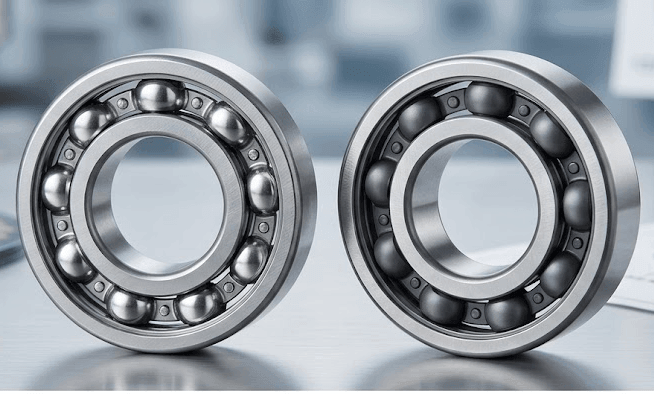
Boron carbide, silicon carbide, alumina, tungsten carbide cermets, cubic boron nitride, and silicon nitride all matter in hard-use applications. Ceramic armor can stop high-energy threats at lower weight than steel. Carbon-ceramic brakes survive extreme heat. Silicon nitride bearings resist wear and electrical current. Carbide and CBN tooling transformed machining.
These are not universal materials, but they are very successful specialist materials.
Solid-State Batteries and Ceramic Separators
Solid-state batteries show both the promise and the frustration of ceramics. Ceramic electrolytes and separators can, in theory, allow safer, higher-energy cells by transporting lithium ions while blocking dendrites. But the same materials can be brittle, hard to densify, difficult to interface with electrodes, and expensive to scale.
That is why solid-state battery news often sounds familiar: impressive lab or pilot-line performance, followed by hard questions about manufacturing, contact pressure, cracking, yield, cost, and lifetime.
Ultra-High-Temperature and High-Entropy Ceramics
Ceramics are still advancing at the research frontier. Ultra-high-temperature ceramics such as hafnium and zirconium diborides are studied for hypersonic leading edges and thermal protection. High-entropy ceramics and compositionally complex ceramics are being explored for thermal barriers, wear resistance, nuclear materials, batteries, thermoelectrics, and extreme-environment coatings.
These fields are exciting, but they are not yet consumer revolutions. They are materials platforms that must still pass the same old tests: processability, reliability, repairability, cost, and scale.
So Why Did the Ceramic Engine Dream Fade?
The ceramic engine dream faded because it combined almost every hard problem at once.
A mass-market engine component must tolerate cyclic thermal stress, vibration, impact damage, combustion chemistry, tight dimensional tolerances, warranty constraints, repair networks, low cost, and high production volume. A ceramic part may handle temperature beautifully but still fail the system-level test.
Also, engine technology did not stand still. Metals improved. Coatings improved. Cooling strategies improved. Combustion improved. Hybridization and electrification changed investment priorities. By the time some ceramic solutions matured, the market was no longer desperate for an all-ceramic internal combustion engine.
The result is not "ceramics failed." It is more precise: monolithic structural ceramics did not become the dominant replacement for metals in engines.
Ceramics Are Not Late, They Are Selective
Ceramics are like a very sharp tool. They are exceptional when the job matches them and frustrating when it does not.
They tend to win when the application needs at least one of these properties:
- Very high temperature capability
- Wear resistance
- Corrosion or oxidation resistance
- Electrical insulation
- Ionic conductivity
- Piezoelectric behavior
- Dielectric performance
- Low density plus high hardness
- Biocompatibility
- Dimensional stability in harsh environments
They tend to struggle when the application needs:
- High tensile toughness
- Ductility
- Cheap machining
- Easy joining or welding
- Low-cost repair
- Large, complex structural shapes
- Fast ramp to millions of parts
- High tolerance for hidden manufacturing flaws
That is why ceramics are everywhere and yet still feel underused.
Sources Consulted
- GE Aerospace: CFM LEAP - LEAP entered service in 2016 and GE states a 15 percent fuel-efficiency improvement.
- GE Aerospace: GE9X Engine - GE9X CMC structures, lower cooling-air needs, fuel-consumption claims, testing, and CMC parts.
- Corning Environmental Technologies - ceramic substrates and particulate filters in emissions-control systems.
- Corning Ribbon Ceramics - thin, flexible ceramic substrates and roll-to-roll manufacturing.
- Ceramic matrix composite overview - CMC motivation, toughening mechanism, and high-temperature applications.
- Ceramic engine overview - history of ceramic engine prototypes and why mass production did not follow.
- Ceramic capacitor overview - MLCC construction and high-volume use.
- Yttria-stabilized zirconia overview - YSZ properties and applications.
- Silicon carbide overview - SiC as a ceramic and semiconductor material for high-voltage and high-temperature devices.
- CAD/CAM dentistry overview - ceramic and zirconia dental CAD/CAM context.
- Ferroelastic toughening and solid electrolytes - ceramic solid electrolytes are promising but brittle and mechanically challenged.
- High-entropy ceramics: propelling applications through disorder - high-entropy ceramics and emerging applications.
- Ultra-high-temperature ceramic overview - UHTC applications and processing limits.
- Wired: QuantumScape and solid-state battery separator challenge - ceramic separator promise and scale-up caveats.
- MarketWatch: QuantumScape Cobra process - 2025 update on ceramic separator process scale-up claims and commercialization caution.
FAQ
Need help selecting or processing advanced ceramic materials for a technical application?
Contact Our Team